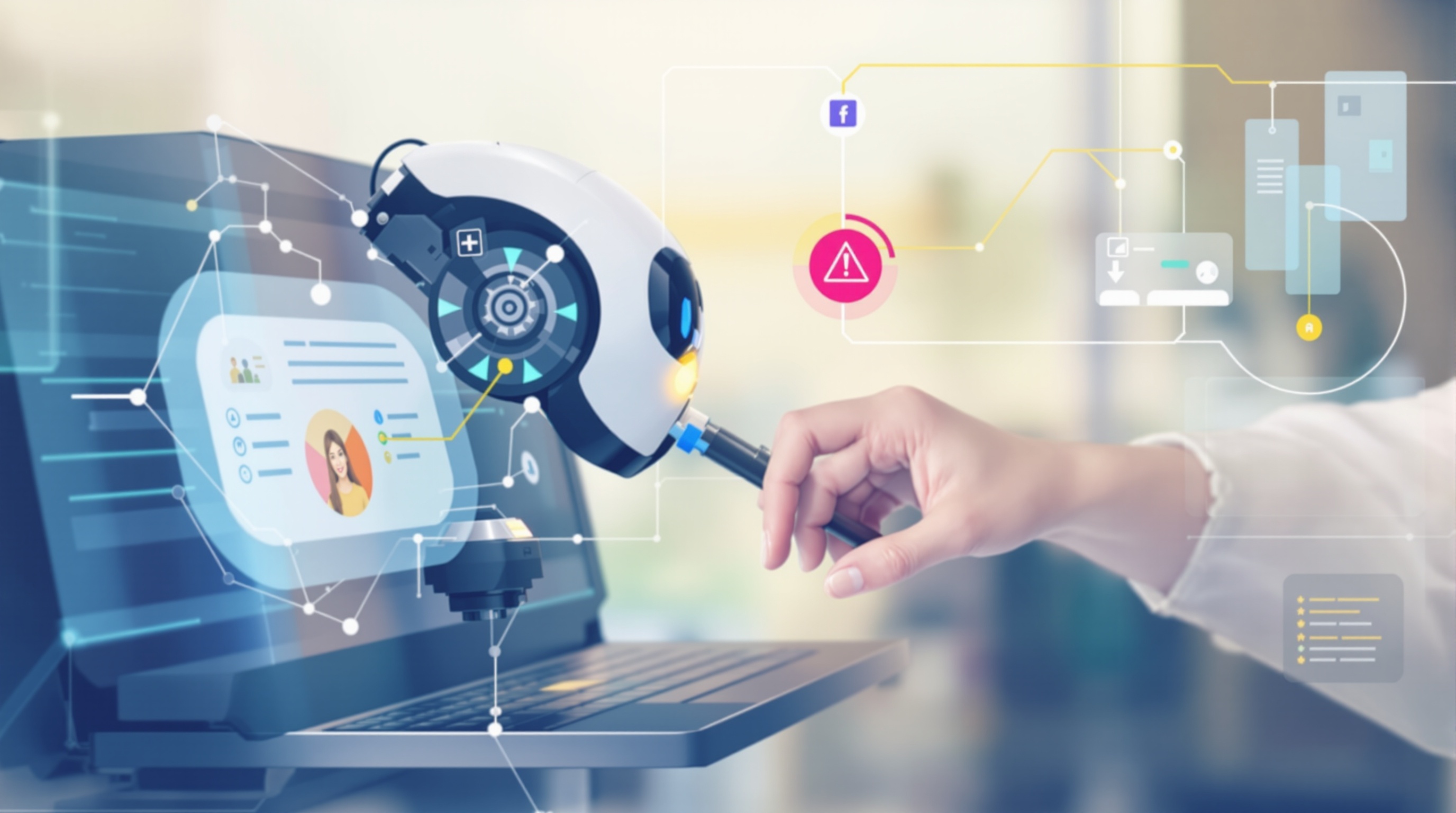
The landscape of work is undergoing a seismic shift. At the heart of this transformation are AI agents—intelligent systems that can perceive their environment, make decisions, and take actions to achieve specific goals. Unlike traditional software that simply executes predetermined commands, AI agents operate with a degree of autonomy that’s fundamentally changing how we approach productivity in both personal and professional contexts.
As businesses and individuals struggle with information overload and repetitive tasks, AI agents are emerging as the solution that doesn’t just automate—it intelligently orchestrates. From scheduling meetings to analyzing data patterns and even writing code, these digital assistants are proving they can handle complex, multi-step workflows with minimal human intervention.
This comprehensive guide will demystify AI agents, explore their practical applications, and show you exactly how they’re redefining productivity for forward-thinking professionals and organizations.
TL;DR: AI agents are autonomous systems that perceive, decide, and act to accomplish goals without constant human guidance. They’re transforming productivity by handling complex workflows, making intelligent decisions, and learning from interactions. This guide covers what AI agents are, how they work, practical implementation strategies, and common pitfalls to avoid when deploying them in your workflow.
What Are AI Agents and Why Do They Matter?
An AI agent is a software system that uses artificial intelligence to autonomously perform tasks and make decisions on behalf of users. Unlike simple automation tools that follow rigid if-then rules, AI agents can adapt to changing circumstances, learn from experience, and handle ambiguous situations.
The key characteristics that define AI agents include:
- Autonomy: They operate independently without constant human supervision
- Reactivity: They perceive and respond to their environment in real-time
- Proactivity: They take initiative to achieve goals, not just respond to commands
- Learning capability: They improve performance through experience and feedback
- Goal-oriented behavior: They work toward specific objectives, adjusting strategies as needed
This combination of capabilities makes AI agents fundamentally different from traditional software, positioning them as genuine productivity multipliers rather than simple tools.
How AI Agents Are Redefining Productivity in Practice
The real power of AI agents becomes apparent when examining their practical applications across various domains. In customer service, agents handle inquiries end-to-end, escalating only when human judgment is truly required. In software development, coding agents can write, test, and debug code while suggesting optimizations.
Consider email management: traditional filters sort messages into folders. AI agents, however, can read emails, understand context, draft responses, schedule follow-ups, and even negotiate meeting times with other agents—all while learning your communication style and preferences.
In data analysis, these agents don’t just generate reports—they identify anomalies, propose hypotheses, run tests, and present actionable insights. They transform raw information into strategic intelligence without requiring you to manually sift through spreadsheets.
The Architecture Behind Intelligent AI Agents
Understanding how AI agents work helps you leverage them more effectively. Most modern AI agents follow a perception-reasoning-action cycle:
WHILE goal_not_achieved:
    # Perception Phase
    environment_state = perceive_environment()
    user_context = gather_user_preferences()

    # Reasoning Phase
    possible_actions = generate_action_options(environment_state)
    best_action = evaluate_and_select(possible_actions, user_context, goal)

    # Action Phase
    result = execute_action(best_action)

    # Learning Phase
    update_knowledge_base(result, feedback)
    adjust_strategy_if_needed()
This architecture enables agents to operate in dynamic environments where predetermined scripts would fail. The learning phase is particularly crucial—it’s what allows agents to become more effective over time, personalizing their behavior to your specific needs and preferences.
Implementing AI Agents: A Step-by-Step Approach
Successfully integrating AI agents into your productivity workflow requires thoughtful planning. Here’s a practical roadmap:
- Identify repetitive, rule-based tasks: Start with processes that consume time but don’t require creative thinking—email sorting, data entry, report generation, or appointment scheduling.
- Define clear success metrics: Establish how you’ll measure agent performance (time saved, accuracy rate, user satisfaction) before deployment.
- Choose the right agent platform: Evaluate options based on integration capabilities, customization options, and the specific tasks you need automated.
- Start with a limited scope: Deploy agents for one specific workflow initially rather than attempting organization-wide transformation immediately.
- Establish feedback loops: Create mechanisms for the agent to learn from corrections and refinements to improve over time.
- Monitor and iterate: Regularly review agent performance, identifying areas where human oversight remains necessary and where autonomy can safely expand.
- Scale gradually: Once proven in one area, extend agent capabilities to additional workflows, building on lessons learned.
Common Mistakes When Deploying AI Agents
Even promising AI agent implementations can fail due to preventable errors. Watch out for these common pitfalls:
- Over-automation too quickly: Attempting to automate complex, judgment-intensive processes before agents have learned organizational context
- Insufficient training data: Expecting agents to perform well without providing adequate examples and feedback during initial deployment
- Ignoring edge cases: Failing to plan for unusual scenarios where agent decision-making might be inappropriate
- Lack of human oversight: Removing human review entirely from critical processes before agents have proven reliability
- Poor integration planning: Deploying agents that can’t access necessary systems or data sources to perform their functions effectively
- Neglecting security considerations: Granting agents excessive permissions without implementing proper access controls and audit trails
- Unrealistic expectations: Treating agents as perfect solutions rather than tools that require ongoing refinement and management
Real-World Use Cases Across Industries
AI agents are already delivering measurable productivity gains across diverse sectors. In healthcare, scheduling agents coordinate patient appointments, specialist referrals, and follow-up care while navigating complex insurance requirements. Financial services firms deploy agents that monitor transactions, flag anomalies, and initiate fraud prevention protocols.
Marketing teams use content agents that analyze performance data, suggest optimization strategies, and even generate A/B test variations. Legal departments employ research agents that review case law, identify relevant precedents, and summarize findings for attorney review.
Software development teams benefit from agents that conduct code reviews, identify security vulnerabilities, suggest refactoring opportunities, and maintain documentation—freeing developers to focus on architecture and creative problem-solving rather than routine maintenance tasks.
The Future of AI Agents and Productivity
The trajectory of AI agent development points toward increasingly sophisticated capabilities. Multi-agent systems, where specialized agents collaborate to accomplish complex objectives, are already emerging. These systems distribute tasks among agents with complementary skills, much like human teams.
We’re also seeing the rise of personalized agents that adapt deeply to individual working styles, preferences, and goals. Rather than one-size-fits-all solutions, these agents become genuine digital colleagues that understand your unique context and priorities.
The integration of AI agents with emerging technologies like augmented reality, Internet of Things devices, and blockchain systems will further expand their capabilities and application domains, creating productivity enhancements we’re only beginning to imagine.
Key Takeaways
- AI agents are autonomous systems that perceive, reason, and act independently to accomplish goals, fundamentally different from traditional automation
- They redefine productivity by handling complex, multi-step workflows with minimal human intervention while continuously learning and improving
- Successful implementation requires starting small, establishing clear metrics, and creating feedback loops for continuous improvement
- Common deployment mistakes include over-automation, insufficient training, and unrealistic expectations about agent capabilities
- The future points toward multi-agent collaboration and deeply personalized digital assistants that adapt to individual working styles
Frequently Asked Questions
What’s the difference between AI agents and regular automation tools?
Traditional automation follows predetermined rules and can’t adapt to unexpected situations. AI agents make autonomous decisions, learn from experience, and adjust their strategies based on changing contexts. They handle ambiguity and complexity that would break rigid automation scripts.
Do AI agents require constant supervision?
Initially, yes—agents need oversight while they learn your preferences and organizational context. As they prove reliable, supervision can decrease. However, human review remains important for high-stakes decisions and edge cases the agent hasn’t encountered before.
How much technical expertise is needed to implement AI agents?
This varies by platform. Many modern AI agent tools offer no-code interfaces for basic implementations, making them accessible to non-technical users. More complex, custom agent systems may require programming knowledge and AI expertise to develop and maintain effectively.
Can AI agents work together, or do they operate in isolation?
Advanced AI agent systems support multi-agent collaboration, where specialized agents communicate and coordinate to accomplish complex objectives. For example, a research agent might gather information that an analysis agent processes, with results then formatted by a communication agent.
What happens when an AI agent makes a mistake?
Well-designed agent systems include error handling, logging, and rollback capabilities. When mistakes occur, they should be logged for analysis, the agent’s decision-making process should be reviewed, and corrective feedback should be provided to prevent recurrence. This is why starting with low-risk tasks is crucial.
Are AI agents secure? What about data privacy?
Security depends on implementation. Reputable platforms employ encryption, access controls, and audit trails. However, you must carefully configure permissions, ensuring agents only access necessary data and systems. For sensitive information, consider on-premises or private cloud deployments rather than public services.
Conclusion: Embracing the AI Agent Revolution
AI agents represent more than incremental productivity improvements—they’re catalyzing a fundamental shift in how work gets done. By handling routine cognitive tasks, making intelligent decisions, and continuously learning, these systems free human workers to focus on creativity, strategy, and high-value judgment that truly requires human insight.
The organizations and individuals who will thrive in the coming years are those who learn to effectively collaborate with AI agents, treating them not as threats to human work but as powerful tools that amplify human capabilities. Understanding how AI agents work, where they excel, and how to implement them thoughtfully is becoming an essential skill for productivity-focused professionals.
Ready to get started? Identify one repetitive task in your workflow that consumes significant time but requires minimal creative judgment. Research AI agent platforms that address this specific need, then pilot a limited implementation. Measure the results, gather feedback, and iterate. The productivity gains you’ll experience will quickly demonstrate why AI agents are redefining how effective professionals work.





Leave a Reply